Showing posts with label organic gardening. Show all posts

Thursday, June 9, 2011

is it that time already?

A. I can't believe it's already June!
B. I can't believe we already have cucumber beetles! (again.)

It seems early to be dealing with these guys, but it turns out they are right on time and we were the ones who were late last year. The good news is that our plants are pretty well established & we already have some cucumbers, so that helps get us a small step ahead of the beetle.


Last year the beetles and the squash bugs completely demolished all of our squash and cucumbers. Seriously, we got one cucumber. And not a single zucchini! I blame myself for not identifying them sooner, but hey - live and learn...

Speaking of identifying, here's what they look like:
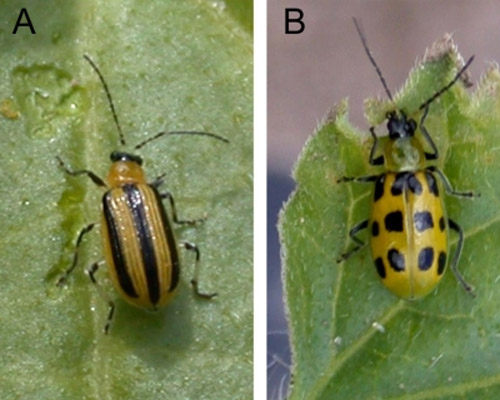
photo from Illinois Fruit and Vegetable News

They're problematic not only because they chew on the leaves & fruit, but also, because they spread squash mosaic virus and transmit a bacteria that causes bacterial wilt in plants like cantaloupe, cucumbers, pumpkins, and butternut squash.

So, what do you do if you see these guys all over your plants? First, act fast! Last year, the bacterial wilt spread so quickly that we lost our cucumber plants in about 2 days. Once the plant is infected, there's no turning back the disease.

Here's what we've been doing to try to keep damage to a minimum:
  • Our first line of defense is companion planting. We surrounded the squash plants with borage and marigolds. The cukes are flanked with radishes, which may be the only reason we don't have even more beetles. This requires some planning ahead of time, but was high on our list of improvements this year.
  • We also moved all the cucurbits into cedar raised beds. We knew we had to move them to another locale in the yard either way because last year's infestation in the row garden was so bad, they were sure to spring up in the same spot this year looking for more. Hopefully the cedar will help deter the insects as well. 
  • Plant extras. If all of our squash & cucumber plants make it, we're going to have more than we know what to do with! We expect to lose some, but we're also expecting to make some pickles.
  • Beneficial bugs. Unfortunately, we didn't plan ahead enough for this one, but beneficial nematodes are recommended to help control the cucumber beetle and many other insects.
  • RELEASE THE CHICKENS! As soon as we noticed these little buggers, we grabbed our juvenile hens and dropped them in the garden bed. I tried to encourage them to eat the beetles instead of the cukes, but they're young and they distract easily, and ok... not really easy to train.
  • Remove & squish. This method is simple - if I see 'em, I squish 'em. But it's time consuming and not likely that I'll catch them all.
  • Neem oil. When we realized there were enough to warrant concern, we decided to break out the neem - mostly because it's what we have on hand & it's a good organic solution that doesn't harm beneficial insects. In our experience, neem works best as a control method rather than an eradication method. It's generally considered one of the safest organic pest solutions, but I checked with a local hatchery just to be sure it was ok to use around the chickens (especially since I just taught them it's ok to climb around and forage in there). They assured us that it is safe & non-toxic for the girls. Another treatment they suggested was food grade diatomaceous earth, which I've read is often used with chickens to prevent/treat mites & lice, and would certainly take care of the cucumber beetles. Should we need to go the eradication route, it's an option, but for now we seem to be staying ahead of them & will hopefully have a pickling party with our own cukes in a couple months. 

Saturday, February 12, 2011

garden v2.0

Our first seed order of the season arrived and we are so excited to get going for Spring! Our entire backyard still looks like a frozen tundra, but we are busy indoors mapping out all of our new plans for garden expansion and chicken residence. We have also both come to the conclusion of "who needs a yard?" ... ok, it was actually more like, "f*** the yard. what's it doing for us??" We made the decision that I think a lot of people have - that we, and the environment, would be better served by landscaping most of the yard with edible & native plants - plus no one really wants to mow. ;) It's not going to be a one-season job, but at least we have an evolving plan to inspire us now!


Our first seed order is from Johnny's Seeds and we're anxious to try them for the first time. Most of them are vegetables that we picked up at the Farmer's Market last summer and loved.
  • Borage - This one was recommended as a companion plant for the tomatoes and squash, but is also a great attractor of pollinators. After last year, we need all the help we can get with controlling squash bugs. Please feel free to send any suggestions! Bonus: the flowers are edible! Hello, pretty salads. :)
  • Cippolini Gold Coin Onions - I tried these for the first time last summer in a canning class and loved them. This will be our first attempt at onions, so we'll see how that goes.
  • Romanian Sweet Peppers
  • Yard Long Red Noodle Beans - another market find last year. These are great in stir fry!
  • Carmen Peppers - I have Deep Mudd Farm to thank for my addiction to these. Yum.
  • Sun Gold Tomatoes - another highly addictive market find. These brought us back every week and we ate them like candy. Best cherry tomato I've ever had!

Speaking of seeds, if you are in the St. Louis area, there is a fun seed swap event coming up with Drop.Swap.Grow! I will be traveling that day, but the awesome boyfriend will be there with seeds for swapping.

Wednesday, September 15, 2010

praying for a mantis.


Look who I found hanging out on the hummingbird feeder! The elusive praying mantis. Some say they are a gardener's dream for managing other plant pests. Plus, I'm one of those weirdos who think they are super cute with their little alien eyes and rotating heads. Apparently, the hummingbird feeder was leaking and the sugar water was attracting every ant for miles... enter the praying mantis for the all-you-can-eat ant buffet! :)

I brought him out to the garden with me and he climbed off the feeder somewhere around the mint and cucumbers. Though he'll have to work a tiny bit harder for his meals, I'm pretty sure he'll have enough food over there. Hopefully he will stay and help out with the remaining cucumber beetles and assassin bugs. Maybe "he" is even a "she" and more little mantises will start popping up.


Beneficial or harmful for the garden? It's true that the praying mantis does not discriminate. He'll eat a cucumber beetle or a beneficial lacewing, both are quite tasty for him. However, with a severe lack of beneficial bugs in the garden and an overgrowth of destructive ones, I'm happy to take my chances. Welcome home, Mr. (or Ms.) Mantis.

Saturday, September 11, 2010

from the garden: today's tomatoes

today's tomato harvest, plus one chili

Welcome September, the month of tomatoes? We finally have tons of green and recently red tomatoes popping up all over the garden. With 8 cherry tomato plants, about 6 brandywine, and 3 unidentified tomato plant gifts, we should be well-stocked for a while so long as the weather doesn't get too cold or wet.

One of the cherry tomato plants has been the star of the garden and has been producing tomatoes consistently for about a month, but never more than a few at a time. Today, I think I pulled 3x that amount from him and quite a few from his neighbors as well. The only productive brandywine (so far) is still all green, but there are about a dozen more fruits starting while we wait for the good-sized ones to ripen. The "gifted" tomato plants have been the most productive, but I admittedly question their fertilizing methods before arriving in our yard. For that reason, they're sequestered to their own area ;) but still far more edible than what I tend to find in a supermarket.

Tuesday, August 10, 2010

we must cultivate our garden.

I have a tendency to not start something until I have all the tools & materials needed to "really start" - which, I’ve recently realized, causes some things to never start. So, rather than waiting for the perfect design or the perfect post, I’m just going to jump head first into this shiny new blog. :)

There are so many new projects going on around here that I decided I wanted a dedicated place for them just so I can keep track! All of the projects pretty much start with, or revolve around, the garden. I’ve had a garden in my current yard before, but never a really hard-working one.


This year, I’ve got a partner in the projects and, with his help, we've managed to expand the garden space, put up a secure fence, and start growing quite a bit of vegetables & herbs from seed. I discovered very quickly after starting that if we take notes on all the discoveries we make now, we'll be able to make lots of improvements in the next year. (even if the summer is already almost over!)

For us, the decision to start organic gardening was an obvious one. There’s a huge yard out there that was nothing but grass, for the most part. We have been buying organic produce for years, but with the standards and regulations becoming more & more lax on organics and the food miles incurred to get a lot of this stuff to our local grocery, we thought we'd try our hand at replacing at least a small portion of that with our own food from the backyard.


We got off to a late start due to all of the initial setup to be done with seed sprouting, tilling, fencing, etc. By the time we got our plants outside, they were way past ready! We planted them anyway and hoped some would make it. So far, the squash varieties and tomatoes are doing the best, along with the hip-high basil. Turns out we were too late with the lettuces and lost the kale to baby bunnies squeezing through the fence openings. We added some chicken wire around the first fence so not even the tiniest bunny fits. We've already learned so much from the process. Plans have already started for next year and include a greenhouse this fall and raised beds for more planting!